There seems to be nothing in your cart.
Didn't find what you were looking for? Contact our consultant.
To save your shopping cart until your next visit, create an account or register .
Browse our Hits sales


There seems to be nothing in your cart.
Didn't find what you were looking for? Contact our consultant.
To save your shopping cart until your next visit, create an account or register .
Browse our Hits sales







Contents
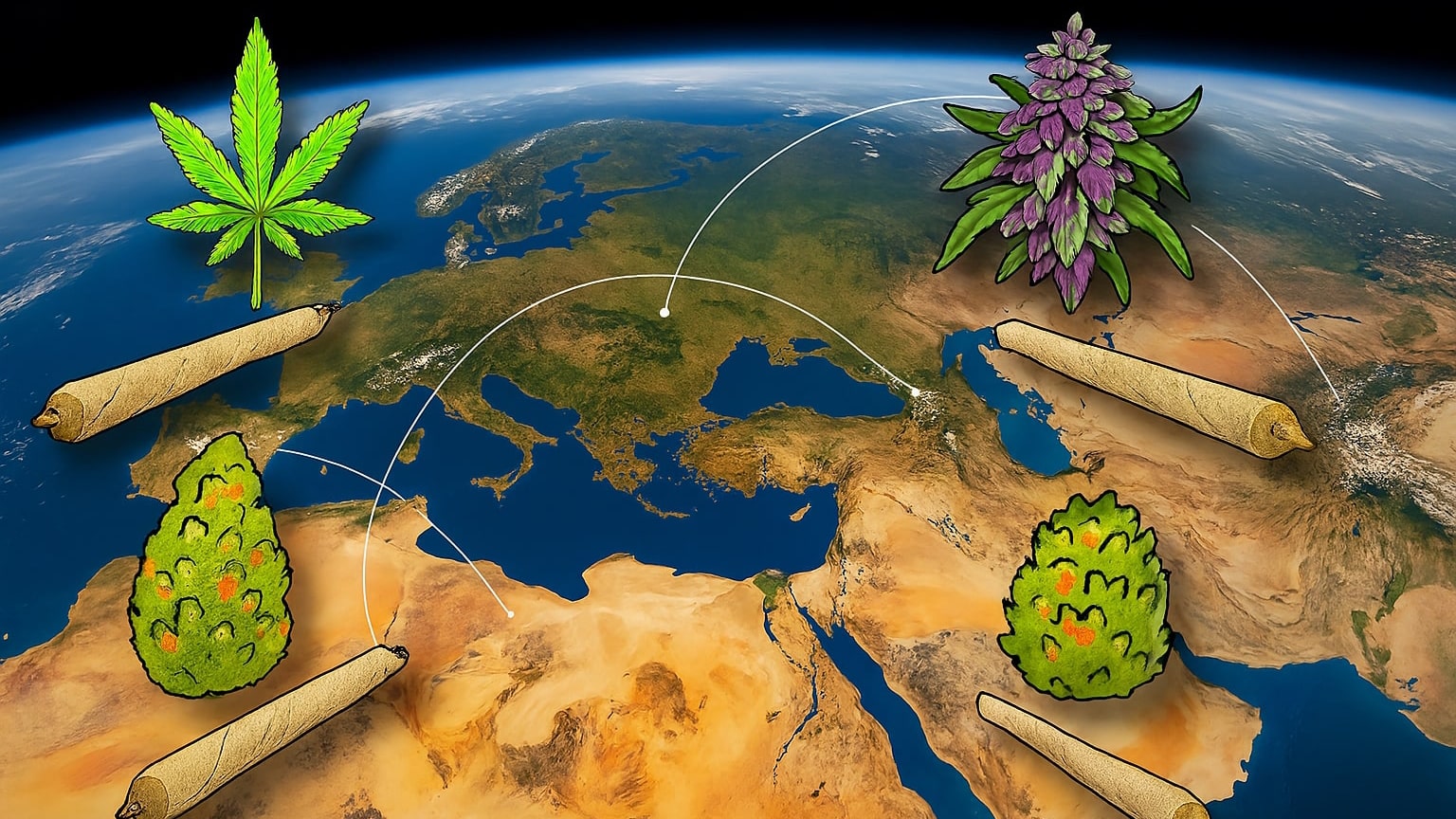
When it comes to the origins of cannabis strains, it is important to understand that many legendary names were formed long before modern breeding. Ancient communities named plants after their place of origin, creating a natural basis for the future classification of cannabis strains. This is how the first names associated with mountainous regions, desert plateaus, and humid tropical areas came about.
For example, traditional Indica cannabis seeds originate from regions in Asia and the Middle East, where the harsh climate has shaped dense and resilient plants. These geographical roots not only determined the external characteristics, but also laid the foundation for how and why many legendary cannabis strains were formed. Subsequently, it was regional affiliation that became the basis for such popular names as Afghan, Hindu Kush, and Thai.
Cultural influence also played a key role. Local names, ritual terms, and everyday designations gradually became elements of a large system explaining the origin of strain names. Therefore, today, when studying cannabis: its history and origin, we can see that most of the early names reflect the natural conditions, traditions, and unique properties of plants that people noticed many centuries ago.

The era of modern breeding marked a turning point in the history of cannabis strains. It was then that the genetic lines known today began to form, on the basis of which many iconic hybrids appeared. Breeders worked with natural lines—traditional sativa cannabis seeds and indica species—to create strains with bright aromas, unique structures, and recognizable effects.
1. The Kush family: the legacy of the Hindu Kush mountain region
The name Kush comes from the geographical region of the Hindu Kush, located at the junction of Afghanistan, Pakistan, and India. It was here that breeders discovered stable Indica lines that gave rise to several iconic strains:
Hindu Kush — a classic representative of local genetics.
Auto Hindu Kush Feminised Silver — a strain named after the Afghan mountain valleys.
Auto OG Kush Feminised Silver — one of the most iconic hybrids of the 20th century, with a controversial but colorful origin.
Each name reflects a geographical trace, making the Kush family a symbol of the origin of cannabis hybrids.
2. The Haze family: the Californian revolution in genetics
Haze strains appeared thanks to breeders from Santa Cruz who experimented with tropical sativas. The result was plants with long flowering times, rich aromas, and high popularity.
The most famous representatives:
Auto Haze Feminised Silver — the progenitor of the entire line.
Super Silver Haze Feminised — the hybrid that brought Haze worldwide popularity.
Auto Lime Haze Feminised Silver — a strain named for its characteristic citrus profile.
Purple Haze Feminised Gold — the name is inspired by both the color of the plant and cultural references from the 1970s.
It is Haze that embodies the powerful influence of cannabis genetics on the modern market.
3. The Skunk family: a scent that became a name
The name Skunk came about because of its unusually strong, recognizable aroma, reminiscent of the smell of the animal of the same name. Breeders working with American lines created a hybrid that became the basis for hundreds of subsequent strains.
Legendary representatives:
Skunk #1 — the progenitor of the family, which became the standard for hybridization.
Super Skunk Feminised Silver — an improved version with enhanced genetics.
Skunk Hero Feminised Silver — the name is inspired by Indian culture and ancient traditions.
Skunk has become a symbol of the breeding era, and its name is an example of why cannabis strains are named as they are..

Modern popular and legendary cannabis strains do not get their names by chance — each one has a specific history, characteristic, or cultural association behind it. Unlike early regional designations, modern names more often reflect the uniqueness of the hybrid. That is why studying the origin of strain names helps to understand how cannabis genetics have developed in recent decades.
Today, strain names are influenced by several factors:
This forms an entire linguistic system that helps distinguish hundreds of strains from one another. The history of cannabis names shows that the name of a strain has become not just a label, but part of a larger cultural and botanical tradition. It helps convey the genetics, origin, biological characteristics, and place of the strain in the development of modern cannabis..
Attention! Errors Seeds does not encourage you to grow cannabis and does not assist in any way with this activity. Growing cannabis is prohibited by Ukrainian law. This article is for scientific and informational purposes only.
 Написать отзыв