There seems to be nothing in your cart.
Didn't find what you were looking for? Contact our consultant.
To save your shopping cart until your next visit, create an account or register .
Browse our Hits sales


There seems to be nothing in your cart.
Didn't find what you were looking for? Contact our consultant.
To save your shopping cart until your next visit, create an account or register .
Browse our Hits sales




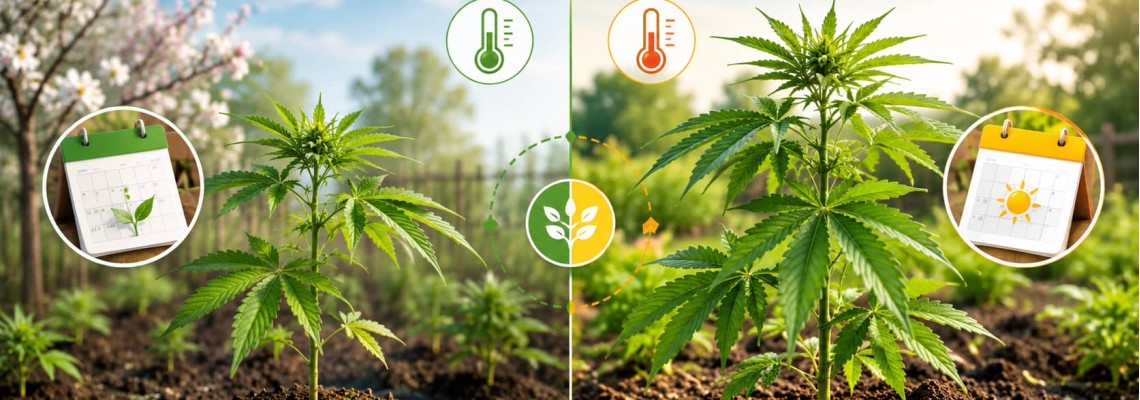
Among gardeners, a stereotype has persisted for decades that successful outdoor cannabis cultivation is only possible with early planting — almost as early as March or April. It is believed that the longer the vegetative period of the bush, the higher the final profit.
However, the modern breeding industry has completely overturned the old grow calendar. Today, experienced outdoor growers increasingly opt for late germination. Let's break down from both scientific and practical perspectives why planting cannabis in June is not a delay, but rather one of the most effective strategies of the season, and how it differs from a May start.
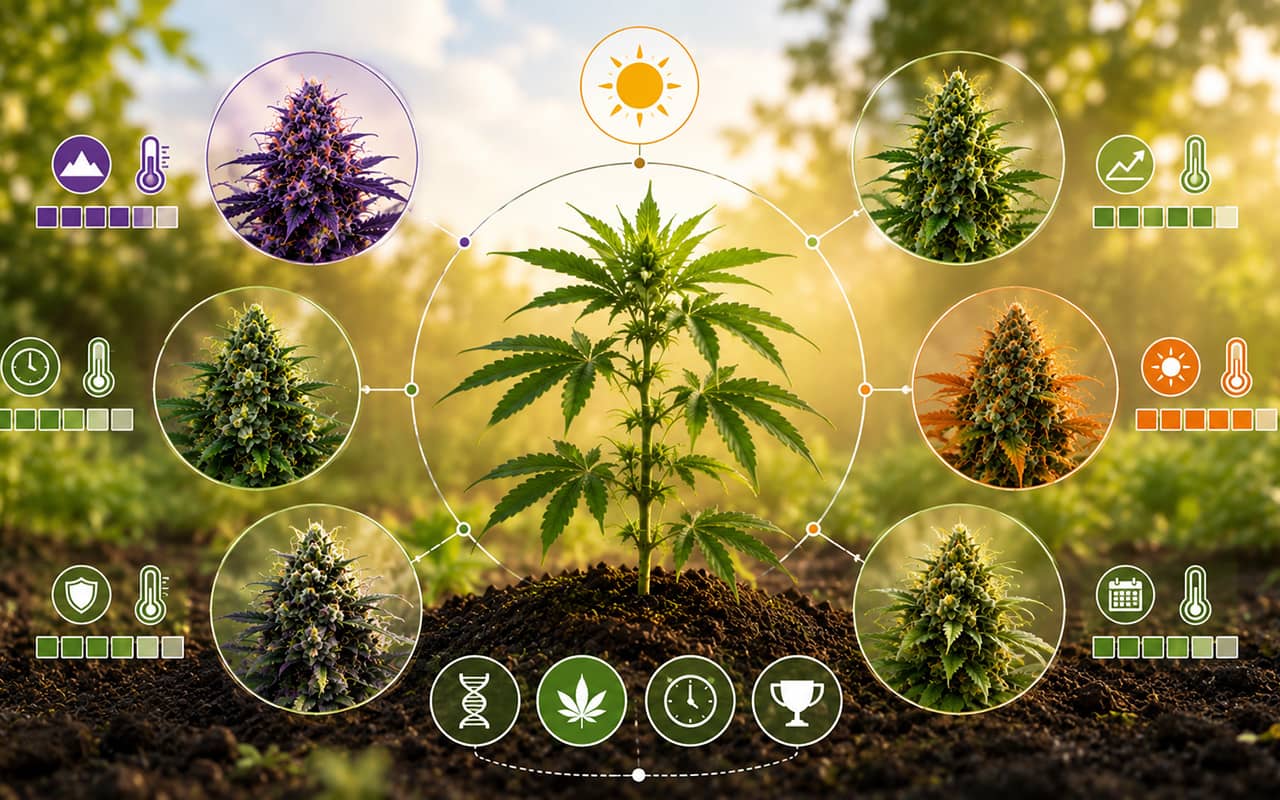
The main misconception of beginners is that they confuse the overall lifespan of the plant with its biological efficiency. In an effort to grow huge "trees," they face hidden problems associated with spring planting:
When a seed germinates in June, however, it immediately enters ideal conditions. The ground is already warmed up, the beneficial soil microflora is maximally active, and the daylight hours reach their peak. As a result, cannabis metabolism accelerates drastically: summer seedlings develop so rapidly that they easily catch up with spring bushes, bypassing the "spring stagnation" stage.
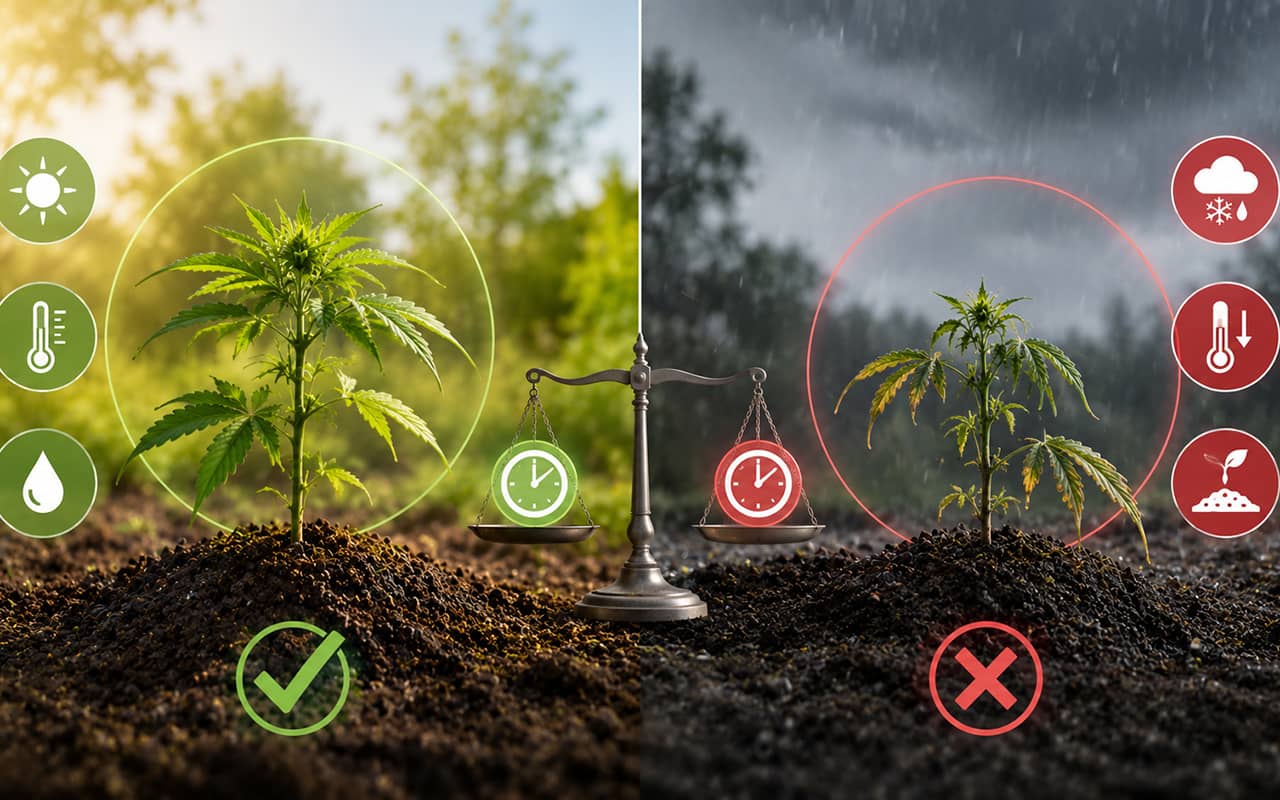
Not all cannabis strains react the same way to a shortened vegetative period. If you decide to launch a cycle at the beginning of summer, the choice of genetics is of paramount importance.
Sativa strains and equatorial hybrids are genetically programmed for explosive growth. Upon transitioning to the flowering stage (the so-called stretch), they are capable of stretching 2–3 times their size. If you plant such a sativa in April, it will turn into an unmanageable jungle by autumn. A June start allows you to contain extreme growth, resulting in a sturdy, well-aerated, medium-sized plant with compact internodes.
While photoperiod plants depend on day length, autoflowering marijuana develops according to its own built-in timer. Its life cycle is rigidly fixed, so any stress in the first few weeks fatally reduces the final yield.
In addition, autos planted in June will flower in July and August — at the peak of the summer sun. This guarantees maximum bud density and abundant production of resin (THC and terpenes).
To finally decide when it is best to plant marijuana, let's compare the key factors in a table:
| Comparison Criteria | Planting in May | Planting in June |
| Start Speed | Slow (due to potential nighttime cold snaps). | Exploratory/Explosive (soil and air are optimally warmed up). |
| Bush Structure | Large, often loose, wide internodes. | Compact, sturdy, balanced. |
| Risk of Diseases and Mold | High (the bush stays outdoors for a long time, accumulating stress). | Low (a short cycle reduces exposure time to pathogens). |
| Who It Is Suitable For | Growers in southern regions aiming for giant volumes. | Residents of temperate/northern climates, owners of terraces and balconies. |
There is an opinion that late cannabis planting lowers the quality of the final product. This is an absolute myth. The quality of the buds, their aroma, and psychoactive potency depend on genetics, proper nutrition, and an abundance of sun during the flowering phase, rather than how many months the bush spent in vegetation.
A medium-sized plant that has not suffered from spring frosts and autumn dampness produces far more uniform, resinous, and dense buds than a fatigued six-month-old giant with a bunch of under-developed lower branches.
Modern outdoor marijuana cultivation has become more flexible and pragmatic. There is no longer a need to rush and risk seedlings in early spring.
June is an excellent entry point for a grow, providing an ideal balance between the effort expended and the quality of the finish. By reducing the plant's time in the field, you ease your care routines and obtain a healthy, top-tier harvest with minimal risks.
 Написать отзыв