There seems to be nothing in your cart.
Didn't find what you were looking for? Contact our consultant.
To save your shopping cart until your next visit, create an account or register .
Browse our Hits sales


There seems to be nothing in your cart.
Didn't find what you were looking for? Contact our consultant.
To save your shopping cart until your next visit, create an account or register .
Browse our Hits sales





Cannabis is often linked to increased appetite. After using THC, a person may feel a strong urge to snack, and familiar food becomes more appealing. So it seems logical to assume: if cannabis boosts appetite, regular use should lead to weight gain. However, scientific data paint a much more complex picture.
Studies do link THC to increased appetite, food craving and sometimes higher food intake. At the same time, most research finds no clear link between cannabis use and increased body weight. Some papers even report lower average body weight or BMI (body mass index) among cannabis users.
This creates an interesting paradox: cannabis can increase appetite, but that does not automatically mean weight gain.
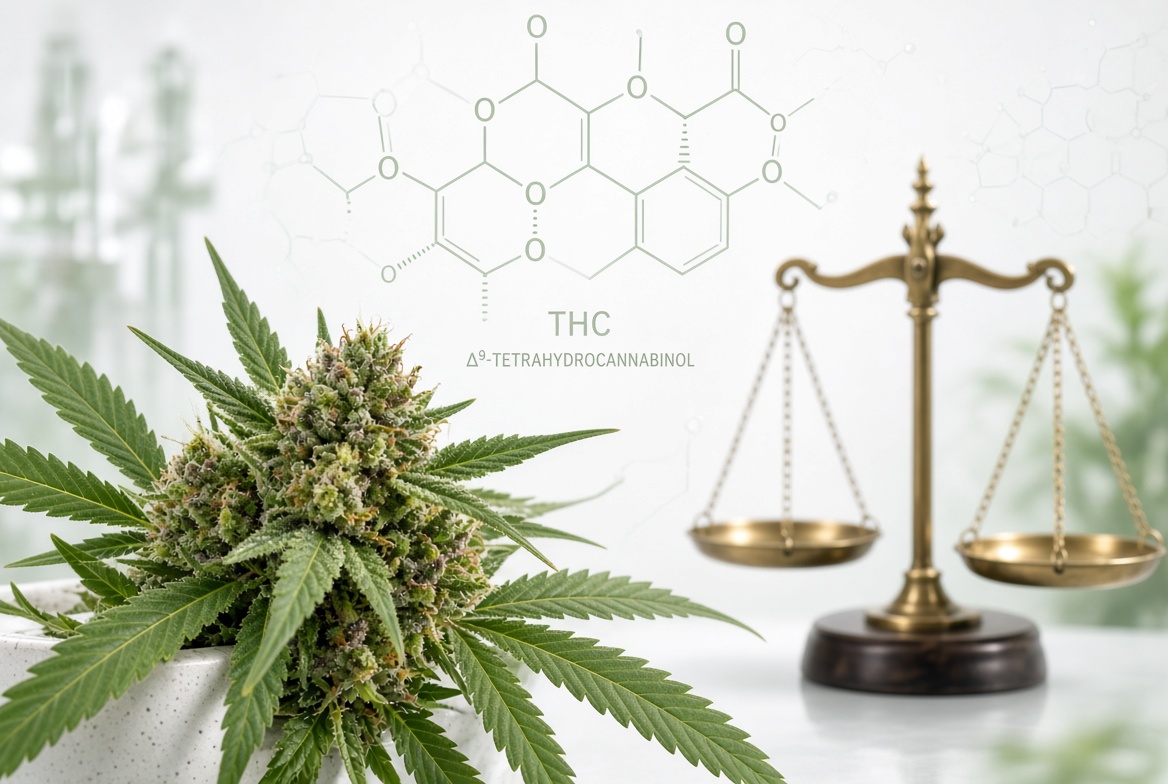
The main component linked to increased appetite is THC — one of the primary cannabinoids. THC interacts with the body’s endocannabinoid system, which is involved in regulating eating behaviour, the reward system and other physiological processes. As a result, food can become more appealing and the desire to eat stronger. This is especially often reported for foods with a pronounced taste and high energy density. A 2025 research review notes a link between THC and increased appetite, food craving and overeating. However, the same review stresses that the relationship between cannabis and body weight remains complex and depends on many factors. Appetite and body weight are not the same thing. It is important to separate short-term appetite increase from long-term change in body mass. A person may feel a strong urge to eat at a given moment, but that does not mean their average calorie intake over a long period will necessarily rise enough to produce noticeable weight gain. Body weight is simultaneously influenced by diet, physical activity, sleep, metabolism and many other factors.
At first glance everything seems obvious:
THC → stronger appetite → more food → more weight.
But in reality this chain does not always work. In observational studies, cannabis users often have body weight that is not higher — and sometimes even lower — than average compared with people who do not use it. A 2023 systematic review and meta-analysis found on average a small reduction in body weight and a tendency toward reduced waist circumference among the groups studied.
However, this does not mean that cannabis is a weight-loss tool. Studies of this type show a statistical association but do not necessarily establish causation. Age, lifestyle, diet, physical activity, frequency of use and other participant characteristics can affect the result. A more recent 2025 review also emphasises that most studies do not find increased body weight among cannabis users despite the link between THC and higher appetite. The authors describe the existing evidence base as complex and heterogeneous.
| Factor | What is known | How conclusive are the data |
| Appetite | THC can increase appetite and food craving | Relatively well studied |
| Food intake | Some studies observe increased food consumption | Results vary |
| Body weight | No convincing link to mandatory weight gain | Data are heterogeneous |
| BMI | Some studies show lower BMI among users | Causal link not proven |
| Waist circumference | Some studies show a small reduction | Further research needed |
| CBD | May differ from THC in effects on appetite | Evidence still insufficient |
Thus one cannot simply say that cannabis “makes you fat” or, conversely, “helps you lose weight”.
Cannabis contains a large number of different chemical compounds, among which THC and CBD are especially often studied. THC and CBD cannot be treated as the same substance. A systematic review of clinical CBD studies found that most of the works reviewed reported reduced appetite and/or body weight, yet some studies found no significant changes, and one observed increased appetite. The authors also noted problems with risk of bias and the need for further research. This again shows why the claim “cannabis affects weight” is too broad.
THC vs CBD comparison
| Characteristic | THC | CBD |
| Effect on appetite | Can increase appetite and food motivation | Studies more often observed no increase or a reduction in appetite |
| Link to body weight | No clear long-term effect established | Possible weight reduction is being studied |
| Evidence strength | Clinical and observational data exist | Data are limited and heterogeneous |
| Can it be considered a weight-control tool? | No | No |
| Further research needed? | Yes | Yes |
It is important to remember that findings on individual cannabinoids cannot automatically be transferred to cannabis as a whole.
Increased appetite can be of interest in medical situations where a person faces loss of appetite or weight. Cannabinoids have indeed been studied as a possible way to influence appetite in various conditions. For example, research has examined their use in states accompanied by weight and appetite loss. However, results are far from as clear-cut as sometimes claimed. A systematic review of studies in cachewebpxia found no significant advantage of cannabinoids over control for body-weight change, and evidence quality was rated as low. Another systematic review of studies in anorexia found limited data on possible weight increase with a THC-containing product, but the number of high-quality studies was very small. Therefore medical cannabis cannot automatically be viewed as a universal tool for weight gain.
Here the answer is even more cautious. Some observational studies and meta-analyses did find an association between cannabis use and lower body weight or BMI. But one cannot conclude from this that cannabis causes weight loss. For example, people in different groups may differ in physical activity, diet, use of other substances, sleep patterns and many other factors. In addition, a 2025 review stresses that cannabis may simultaneously be linked to less healthy eating behaviour and lower physical activity. This again shows how complex it is to interpret the relationship between cannabis and body weight.
Several observations emerge at once:
Therefore it is more accurate to speak not of a direct effect of cannabis on weight, but of a complex relationship between cannabinoids, appetite, eating behaviour and energy balance.
In popular culture people often use the split into sativa and indica, as well as commercial categories such as autoflowering and feminized plants. However, these names alone do not allow a conclusion about how a specific product will affect appetite or body weight. For scientific analysis the chemical composition is far more important — above all the content and ratio of different cannabinoids — as well as the characteristics of the specific preparation. The same applies to growing conditions — indoor or outdoor — and other plant traits. They are not independent indicators of effect on body weight. As noted above, the strain name (sativa, indica, autoflower, etc.) by itself says little about effects on appetite. What matters far more is the real chemical composition of a given batch. Nevertheless, a number of classic strains have built a stable reputation among users. Below are approximate data (ranges can vary widely depending on growing conditions, phenotype and lab tests).
| Strain | Type | THC (approx.) | What users say about appetite | Common terpenes |
| OG Kush | Hybrid (more indica) | 19–26 % | Classic “munchies”; many report strong hunger | myrcene, limonene, caryophyllene |
| Girl Scout Cookies | Hybrid | 18–28 % | Often causes a noticeable appetite increase | caryophyllene, limonene, myrcene |
| Northern Lights | Indica | 16–21 % | Usually gives good appetite + strong relaxation | myrcene, caryophyllene, pinene |
| Granddaddy Purple | Indica | 17–23 % | One of the most “ravenous” strains by reviews | myrcene, linalool, caryophyllene |
| Blue Dream | Hybrid (more sativa) | 17–24 % | Raises appetite moderately, without strong sleepiness | myrcene, pinene, caryophyllene |
| Bubba Kush | Indica | 15–22 % | Strongly boosts appetite, especially in the evening | myrcene, caryophyllene, limonene |
| Gorilla Glue #4 | Hybrid | 20–30 % | Due to high potency often causes strong hunger | caryophyllene, myrcene, limonene |
Medical cannabis and appetite
It is worth distinguishing medical use of cannabinoids from everyday ideas about cannabis. Clinical studies have examined various preparations and individual cannabinoids. Their results cannot automatically be transferred to all cannabis-containing products. Systematic reviews show that evidence for the efficacy of medical cannabinoids varies strongly depending on the substance and the specific medical condition. Even in studies where an effect on appetite was noted, this was not necessarily accompanied by a significant increase in body weight. For example, a systematic review of studies in cancer found limited evidence that medical cannabis can increase appetite.

Based on current scientific data, such a conclusion cannot be drawn. THC can indeed increase appetite, but that does not turn cannabis into a reliable tool for weight gain. On the other hand, the association with lower body weight found in some studies does not mean cannabis is a weight-loss tool. For CBD there is also still not enough high-quality data to treat it as a proven method of body-weight control. Therefore the most accurate conclusion is:
cannabis can noticeably affect appetite and eating behaviour, but its long-term effect on body weight remains complex and insufficiently studied.
Cannabis and body weight are a good example of why one should not draw conclusions from a single physiological effect alone. THC can increase appetite and food craving. However, that does not mean automatic weight gain. Observational studies often show no link to increased weight, and some even find lower BMI among users. CBD, in turn, has been linked in a number of studies to reduced appetite and body weight, but the quality of evidence is not yet high enough for firm conclusions.
Thus, cannabis cannot be considered either a universal weight-loss tool or a reliable method of weight gain. Its effect on appetite is real, but the relationship between appetite, eating behaviour and final body weight is far more complex. That is why modern research continues to study not only appetite itself, but also long-term changes in weight, body composition, physical activity and eating behaviour.
 Написать отзыв