There seems to be nothing in your cart.
Didn't find what you were looking for? Contact our consultant.
To save your shopping cart until your next visit, create an account or register .
Browse our Hits sales


There seems to be nothing in your cart.
Didn't find what you were looking for? Contact our consultant.
To save your shopping cart until your next visit, create an account or register .
Browse our Hits sales





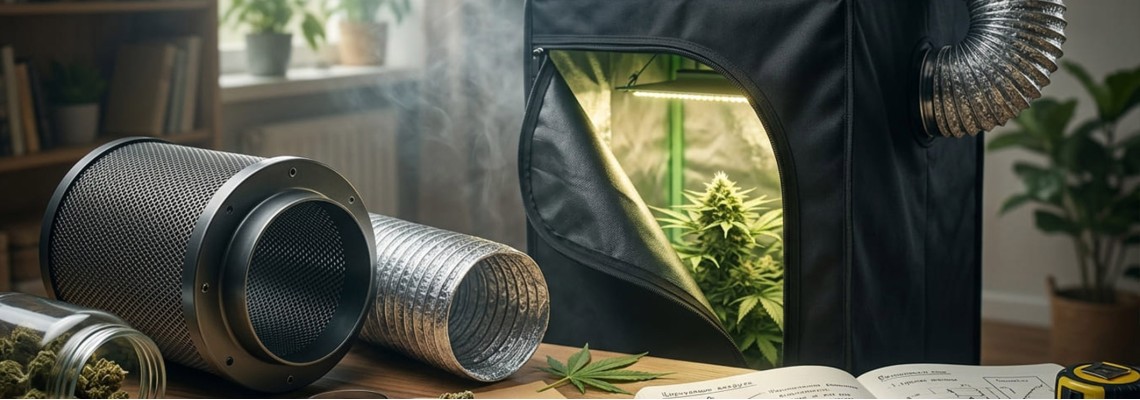
In this article we will figure out whether low-odor strains really help keep discreet growing or whether this is a marketing myth. Many growers, especially those working in an apartment, on a balcony or in a small grow box, first of all look for strains with minimal smell. It seems logical: less aroma — less attention. In practice everything is a little more complicated. Low-odor strains do smell less than most classic strains, but they do not become completely “invisible”. The difference is noticeable, but it depends on genetics, growing conditions, flowering stage and additional odor-control measures.
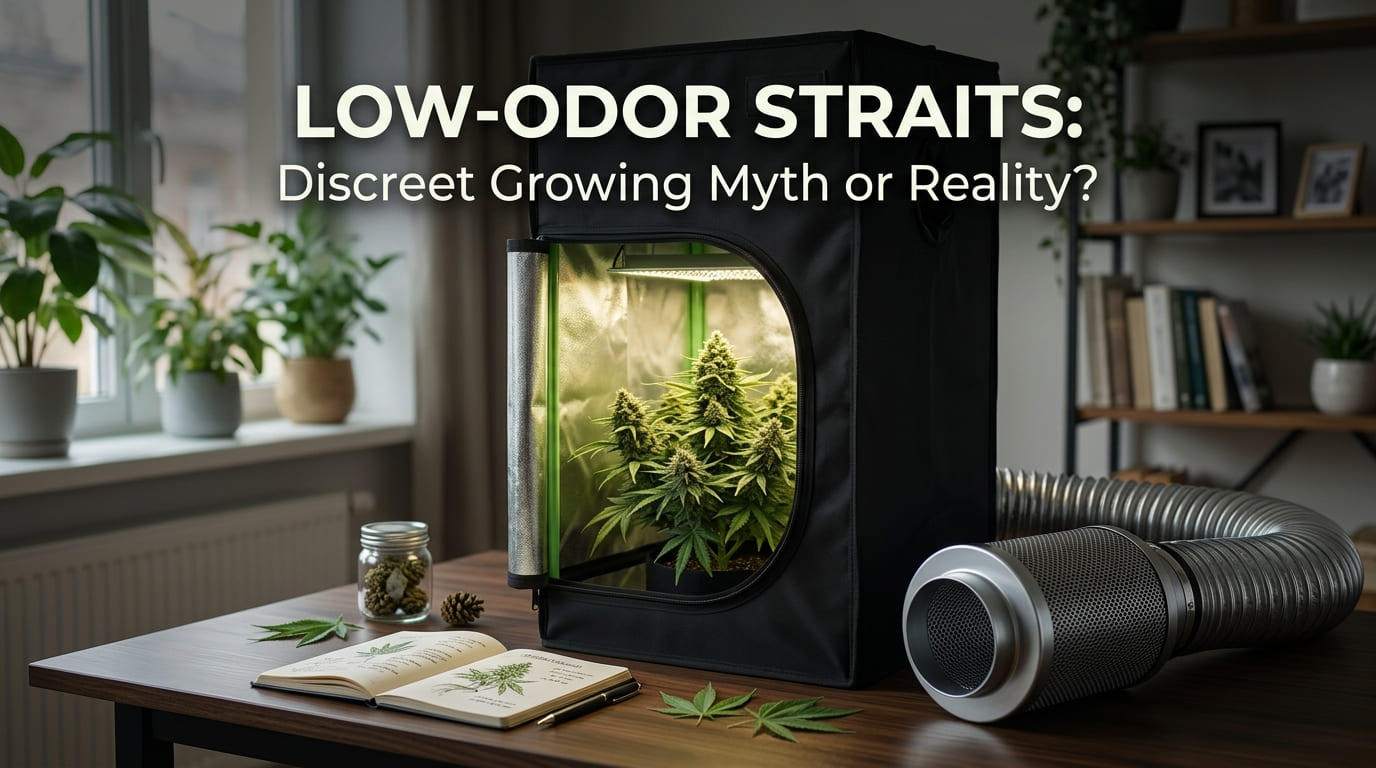
The smell of cannabis is created by terpenes — volatile compounds that are responsible not only for aroma but also for modulating the effect. Some strains have a very bright and “skunky” terpene profile, others a more restrained, earthy, sweet or piney one. It is the latter that usually fall into the category of low-odor strains.
It is important to understand: low-odor ≠ completely odorless. By the end of flowering even the “quietest” strain will be noticeable next to the plant. But the difference with bright Cheese, Skunk or Diesel hybrids is really substantial.
Comparison: ordinary strain vs low-odor
| Parameter | Ordinary bright strain | Low-odor strain |
| Odor intensity | High, often sharp | Low–medium, soft |
| When it appears | Already from mid-veg / start of flowering | Closer to mid–end of flowering |
| Typical profile | Skunk, diesel, cheese, chemical | Earth, pine, sweetness, light fruit |
| Difficulty of masking | High, needs a powerful carbon filter | Significantly lower |
| Suitable for discreet | With caution + good ventilation | Yes, especially together with a filter |
Low-odor strains are especially useful if you grow in conditions where smell is critical: apartment, neighbors, a small grow box without powerful extraction. They combine well with autoflowers (short cycle = less time of “exposure”) and classic feminized strains.
Examples of real low-odor strains:
Here are strains that are currently in the catalogue and clearly illustrate the category:
| Strain | THC | Type | Features |
| Auto Northern Lights Feminised Silver | 22 % | Autoflower, indica | Discreet classic, low odor, compact |
| Auto Northern Lights Feminised Gold | 22 % | Autoflower, indica | Stable, soft aroma, good for beginners |
| Northern Lights Feminised Silver | 15–20 % | Photoperiod, indica | Legendary low-odor strain |
| Northern Lights Feminised Gold | 20 % | Photoperiod, indica | Low odor, reliable genetics |
| Auto Blue Mystic Silver | 17 % | Autoflower, indica | Very restrained aroma, compact |
| Auto Somango Feminised Gold | 20 % | Autoflower, indica | Mild sweetish smell, pleasant taste |
| Kali Mist Feminised Gold | 22 % | Photoperiod, sativa-dominant | Low odor, invigorating effect |
Most of these strains belong to indica or indica-dominant hybrids — they traditionally smell less aggressively than bright sativa or skunk lines. Autoflowering versions are especially convenient: a short life cycle reduces the overall time when odor can become a problem.
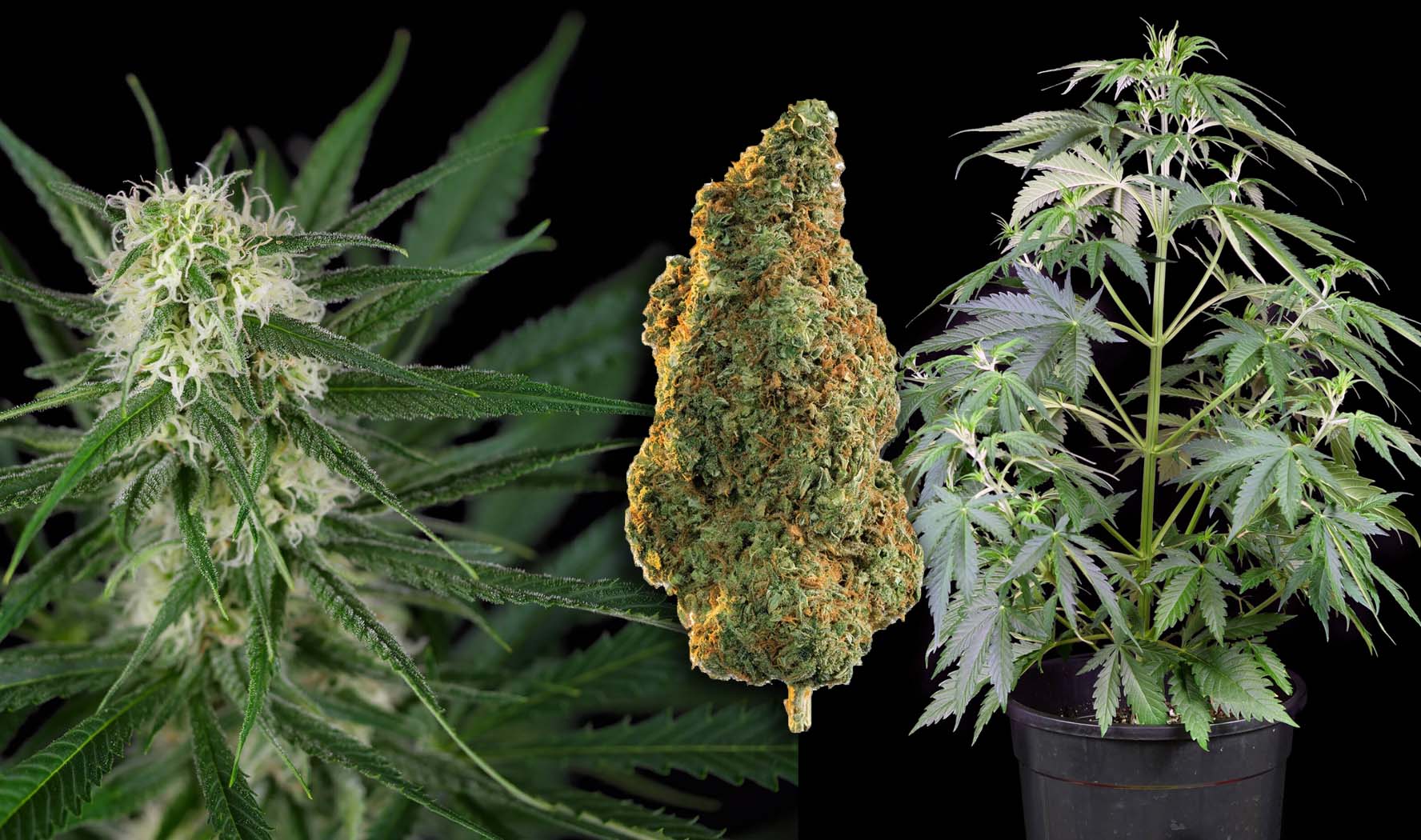
Low-odor strains are not a magic pill, but one element of a system. Together with the right choice of genetics the following work:
Terpenes are part of the plant’s defense and part of its chemical profile. Breeders can reduce intensity and change the character of the aroma, but removing it completely without loss of bud quality is practically impossible. That is why even in the low-odor category it is always stated “weak” or “medium”, never “absent”. Experienced growers note: the difference between a good low-odor strain and an average bright one is often greater than between two low-odor strains. Northern Lights and Blue Mystic genetics consistently rank among the “quietest” on the market.
In practice the best combination works as follows:
Low-odor strains are not a myth, but a real tool for discreet growing. They noticeably reduce the intensity and character of the smell, especially in combination with proper ventilation and a filter. But relying on genetics alone is not enough: even the quietest strain will smell at the end of flowering if conditions favor it.
In the Errors Seeds catalogue there is a separate category low-odor strains with proven options — from classic Northern Lights to compact autoflowers. Choose consciously, combine genetics with technical measures and grow calmly.
 Написать отзыв