There seems to be nothing in your cart.
Didn't find what you were looking for? Contact our consultant.
To save your shopping cart until your next visit, create an account or register .
Browse our Hits sales


There seems to be nothing in your cart.
Didn't find what you were looking for? Contact our consultant.
To save your shopping cart until your next visit, create an account or register .
Browse our Hits sales



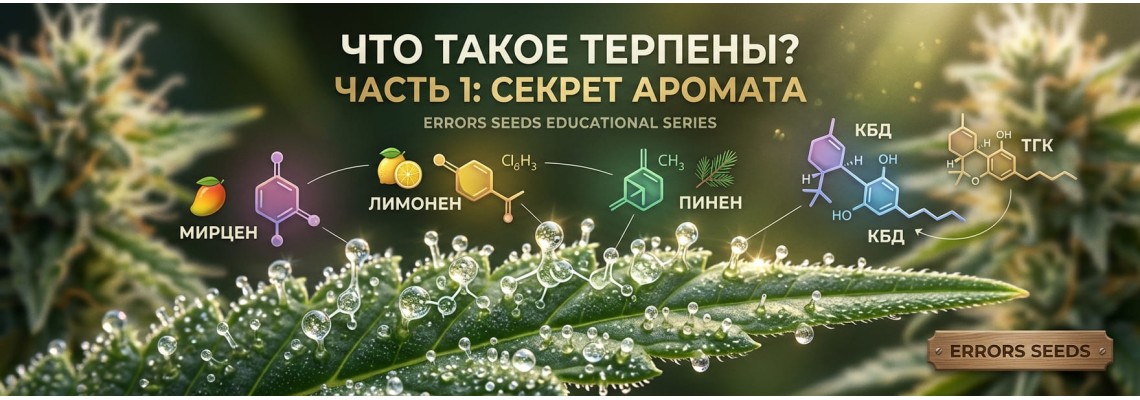
Terpenes in cannabis are volatile organic compounds produced in the plant’s trichomes. They shape its unique aromatic profile, flavour and the nuances of its effects. For a long time the industry assumed that potency and effect character were defined solely by cannabinoid percentages (THC and CBD), but it is the terpenes that steer those compounds from deep relaxation to creative lift.
Every cannabis strain has a unique terpene fingerprint — a mix of dozens of different aromatic molecules. That is why two different hybrids with the exact same THC level can feel completely different, leave a different aftertaste and trigger a different range of emotions.
Terpene synthesis takes place in the capitate glandular trichomes on the surface of flowers and leaves, in parallel with cannabinoid production. Each cannabis flower is a complex biochemical lab where resin output depends on the plant’s development stage, light, temperature and nutrition.
Understanding the biology of terpenes helps approach growing, drying and curing more carefully. Without the right microclimate these volatile compounds break down quickly and strip the buds of their original natural bouquet.
Trichomes act as a natural reservoir: the glands fill the accumulated resin with essential oils at peak flowering. These microscopic structures densely cover the surfaces of ripening flowers and nearby sugar leaves.
Terpene concentration peaks when the trichomes are fully mature. At that point the room or greenhouse fills with sharp pine, berry, citrus or fuel notes.
The plant produces terpenes for broad protection against pests, fungi, infections and harsh environmental factors. The essential compounds form a kind of chemical shield around the flowers that helps the plant reach full seed maturity.
Resin production costs the plant a lot of energy, which is justified by these protective roles:
The “entourage effect” is biological synergy in which terpenes and cannabinoids amplify and modulate each other. Pure THC isolate in the lab produces a flat, linear effect, while terpenes add depth, harmony and a specific direction.
Terpenes interact with receptors of the human endocannabinoid system (CB1 and CB2) and can alter the permeability of the blood–brain barrier. One compound helps THC enter brain cells faster; another reduces excess nervous tension.
Through this synergy terpenes act as natural guides, making the overall plant effect softer, deeper and more controllable.
Effect character is set by the dominant terpene groups that push THC toward sedation or stimulation. The same THC level will feel different depending on the essential-oil mix.
If myrcene dominates the flowers, the result is a strong sedative vector with physical relaxation. If limonene and terpinolene dominate, the vector is stimulating, with mood lift and creative drive.
Cannabinoids are unique psychoactive molecules of the genus Cannabis, while terpenes are universal volatile aromatic hydrocarbons found across the plant kingdom. They are made in the same glands but serve very different biological roles.
The main differences lie in psychoactivity, occurrence in nature and sensitivity to temperature. Cannabinoids drive intoxication strength; terpenes shape taste, aroma and fine-tune the effect.
| Parameter | Cannabinoids (THC, CBD, CBG) | Terpenes (Myrcene, Limonene, etc.) |
| Main role | Effect strength and impact on the endocannabinoid system | Taste, smell and precise tuning of the effect |
| Psychoactivity | THC causes direct psychoactive intoxication | Do not cause psychoactive intoxication on their own |
| Occurrence in nature | Found almost only in cannabis | Widely present in pines, citrus, lavender, black pepper |
| Heat sensitivity | Stable when heated (break down at 160–200 °C) | Highly volatile; evaporate already at 30–70 °C |
A rich terpene profile is preserved by moderate temperatures and slow, careful drying of the flowers. High heat and fast drying can drive off up to 80% of the essential oils.
Growers who want to keep the bouquet prefer quality genetic lines. Stable photoperiod or autoflowering seeds offer strong potential. Controlled indoor growing helps retain the lighter terpenes at the finish, while organic outdoor growing brings out the fullest range of aromatic fractions.
The brightest terpene bouquets come from hybrids bred for high essential-oil content. The catalog includes popular strains with different aroma and effect profiles.
| Strain name | Dominant terpene | Aromatic profile | Effect traits |
| Auto Gagarin Feminised Silver | Myrcene / Caryophyllene | Sharp fuel-earthy bouquet with chocolate notes | Very strong knockout “stone”, deep relaxation |
| Auto Orange Bud Feminised Gold | Limonene / Valencene | Bright ripe citrus and sweet orange tones | Energetic “high”, mood lift and creative tone |
| Auto Chocolope Feminised | Ocimene / Myrcene | Spicy cocoa, coffee and oriental sweets aroma | Soft euphoria, clear mind and light body relaxation |
| Auto Banana Punch Feminised Silver | Limonene / Caryophyllene | Tropical fruit mix with banana in the lead | Smooth calming effect that eases stress |
| Auto Super Bud Feminised Gold | Myrcene / Humulene | Classic musky, sweet-herbal profile | Clear physical relaxation and increased appetite |
| Auto Northern Light | Pinene / Caryophyllene | Fresh pine, wood and spice tones | Peaceful rest, help with insomnia and anxiety |
| Auto Gorilla Cookies Feminised Gold | Caryophyllene / Limonene | Dessert profile of baked goods, nuts and diesel | Balanced euphoric “high” with smooth sedation |
| Auto Sour Diesel Feminised | Terpinolene / Limonene | Sharp fuel-citrus aroma with a sour edge | Strong energising charge and sociability |
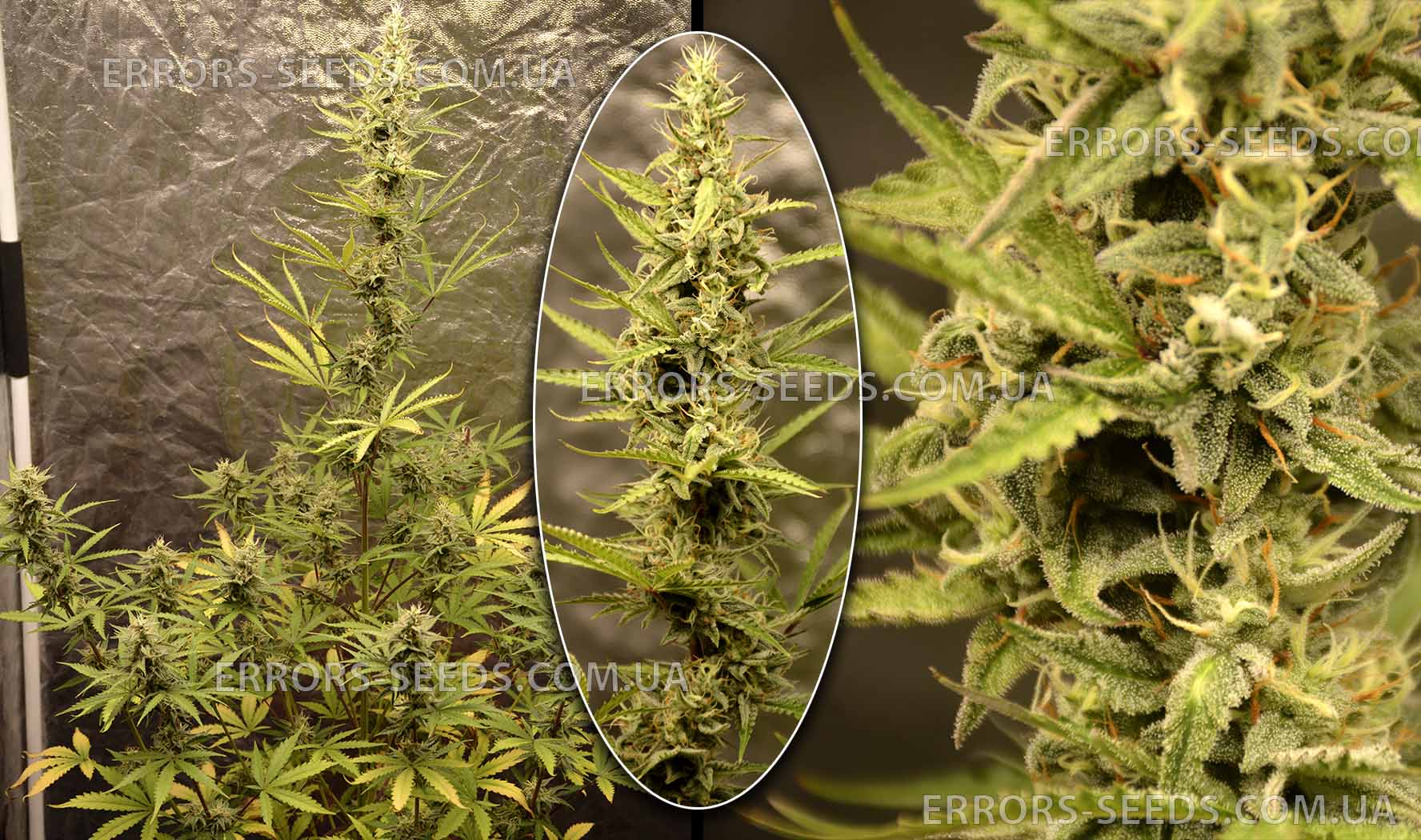
Choose the aromatic profile by the effect you want: musky-earthy tones for relaxation, citrus-pine for activity. The genetic base is chosen accordingly.
Those who prefer calm will like options dominated by indica. For bright energy the classic choice remains sativa. The strongest “entourage effect” is found in the high THC category. The Errors Seeds online store offers a wide seed selection, including medical cannabis with a CBD–terpene balance.
Terpenes are considered a core part of cannabis because they shape the recognisable taste, give the plant natural protection and set the individual direction of THC’s action. Without a terpene profile even the strongest strain would feel one-dimensional.
It is the mix of essential oils that turns the flowers into a unique product with its own character.
Read the second part of the terpene guide on our blog: “What are terpenes? Part 2: TOP-5 main terpenes and their properties”
No. Terpenes do not cause psychoactive intoxication by themselves. They interact with body receptors and only influence the direction, softness and nuances of the THC effect.
Intensity and composition of the terpene bouquet depend on growing conditions, light, temperature and drying quality. Drying mistakes can evaporate up to 80% of the essential oils.
Terpenes are highly volatile and begin to evaporate already at 30–70 °C. That is why flowers should not be dried in hot rooms.
Myrcene drives a clear sedative and relaxing effect. High myrcene together with THC produces deep physical relaxation.
Terpenes deter insect pests with their sharp smell, protect flowers from mould through antiseptic properties and shield cells from overheating and UV radiation.
Pure THC without terpenes gives a flat, linear effect that can sometimes trigger anxiety. Combined with terpenes the “entourage effect” unfolds and makes the experience richer and more harmonious.
Series of articles on cannabis terpenes:
 Написать отзыв