There seems to be nothing in your cart.
Didn't find what you were looking for? Contact our consultant.
To save your shopping cart until your next visit, create an account or register .
Browse our Hits sales


There seems to be nothing in your cart.
Didn't find what you were looking for? Contact our consultant.
To save your shopping cart until your next visit, create an account or register .
Browse our Hits sales





In the first part of our series we established that terpenes create the unique character of every cannabis strain and drive the “entourage effect”. Although cannabis resin contains more than two hundred different aromatic hydrocarbons, just five of them dominate the vast majority of modern hybrids.
Understanding how these key compounds work lets you pick collector seeds with fine-grained precision. You can decide in advance whether a strain will give an energising high for work and creativity or sink you into deep bodily calm after a hard day.
The ranking of key compounds includes five main terpenes: myrcene, limonene, beta-caryophyllene, pinene and linalool. Each has its own chemical structure and exerts a clearly defined modulating effect on the human body when it works in synergy with cannabinoids.
It is important to remember that terpenes do more than affect smell: they can enter the bloodstream and interact directly with nervous-system receptors, changing the intensity and character of the experience.
Myrcene is the most common terpene in cannabis, making up to 50% of the total essential-oil volume in indica hybrids. It has a dense earthy and musky aroma with notes of ripe mango and produces deep muscle relaxation.
Myrcene’s main biological trait is its ability to lower the resistance of the blood–brain barrier. It increases the permeability of cell membranes, allowing THC and CBD to enter nerve tissue faster and bind to receptors, producing the classic sedative effect.
Limonene is recognised by the juicy scent of freshly cut lemon, orange and lime, delivering a strong mood lift and mental alertness. This terpene stimulates serotonin and dopamine production while lowering cortisol levels in the body.
Combined with THC, limonene steers the effect toward a clean, energetic “high”: it clears anxious thoughts, sharpens the mind and sparks creative activity, making sativa strains ideal for daytime use.
Beta-caryophyllene is unique in being the only terpene that can bind physically and directly to endocannabinoid CB2 receptors. With a spicy, peppery aroma, it is found in black pepper and cloves.
Through direct contact with CB2 receptors, caryophyllene has strong anti-inflammatory potential without any psychoactive effect. It also effectively softens excess anxiety from high-THC strains.
Pinene gives flowers a bracing scent of pine forest and cedar resin while improving breathing and cognitive function. This terpene has a clear bronchodilator action and widens the lung bronchioles.
Pinene’s main strength is its ability to block the breakdown of acetylcholine — a key neurotransmitter for working memory. Strains high in pinene help keep the mind clear and focused.
Linalool is responsible for an elegant lavender bouquet with spicy undertones and delivers deep calming and anticonvulsant effects. It optimises GABA receptor activity in the central nervous system, reducing excessive neuronal excitability.
This compound effectively eases nervous exhaustion and helps with insomnia, which is why it is highly valued in therapeutic practice.
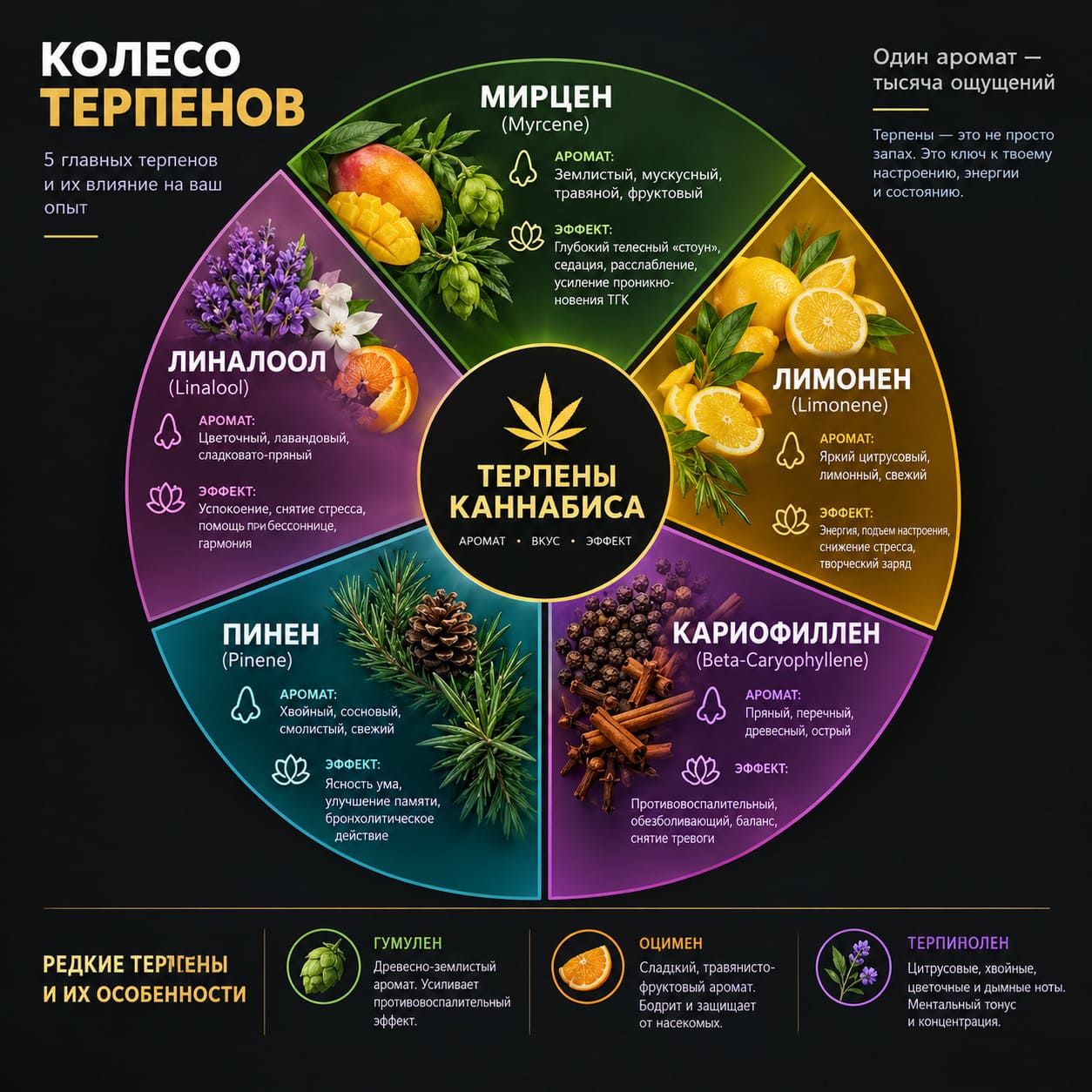
Rare minor terpenes add the final touches to the aromatic palette, creating unique flavour nuances and influencing the individual character of the effect. Even fractions of a percent of these compounds can change how a strain is perceived.
Humulene brings woody-earthy notes and boosts the anti-inflammatory properties of caryophyllene, while ocimene fills the bouquet with sweet-fruity tones. These secondary compounds make the flavour palette multi-layered and complex.
Terpinolene, with its citrus-smoky aroma, gives a bright mental tone and stimulates thought processes, rounding out the palette of rarer essential oils.
Dry THC figures do not reflect the real effect, because synergistic combinations of minor terpenes influence it directly. Two strains with the same lab analysis can feel completely different because of their individual terpene passports.
That is why professionals recommend studying the full aromatic composition of the plant to understand the character of the future harvest accurately.
The modern industry treats terpenes as the main navigation markers that define a strain’s therapeutic and practical value. Orienting on the aromatic profile makes it possible to match genetics to specific goals.
In medical practice terpenes form the basis for targeted phytotherapeutic protocols for chronic pain, inflammation and insomnia. Combinations such as myrcene and linalool are successfully used to ease anxiety states.
Specialised lines in the medical cannabis category are developed with CBD–protective terpene synergy in mind.
For evening relaxation and insomnia, choose strains with earthy and pine notes; for a productive day, citrus and spicy profiles. A well-matched aroma always aligns with personal biorhythms.
Below is a summary table of the key terpenes for easy reference to their properties.
| Terpene | Aromatic profile | Natural sources | Effect on the body |
| Myrcene | Earthy, musky, herbal, fruity | Mango, hops, thyme, basil | Deep body “stone”, sedation, increased THC permeability |
| Limonene | Bright citrus, lemon, fresh | Citrus peel, juniper, rosemary | Energetic “high”, mood lift, reduced stress |
| Caryophyllene | Spicy, peppery, woody, sharp | Black pepper, cloves, cinnamon | Anti-inflammatory effect, CB2 receptor support, anxiety relief |
| Pinene | Fresh pine, resinous | Pine needles, rosemary, sage | Mental clarity, improved memory, bronchodilation |
| Linalool | Floral, lavender, sweet-spicy | Lavender, coriander, birch bark | Nervous-system calm, help with insomnia and stress |
The catalog offers a wide range of hybrids with carefully balanced terpene compositions, so you can experience the difference between aromatic profiles in practice.
| Strain name | Dominant terpenes | Aromatic bouquet | Effect character |
| Auto Zkittlez Feminised Silver | Ocimene / Caryophyllene | Sweet fruit-candy profile with berry notes | Joyful euphoria, mood lift and soft relaxation |
| Auto Blue Cheese Feminised Silver | Myrcene / Caryophyllene | Piquant cheese aroma with a dense berry trail | Deep physical relaxation and evening calm |
| Auto Moby Dick XL Feminised | Pinene / Terpinolene | Rich pine, wood and incense tones | Strong stimulating “high”, energy and sociability |
| Auto Bruce Banner Feminised Silver | Limonene / Caryophyllene | Bright citrus-diesel notes with a spicy finish | Explosive energy surge shifting into pleasant relaxation |
| Auto Amnesia Feminised Gold | Limonene / Pinene | Sparkling lemon-muscat bouquet with fresh pine | Clear creative euphoria, focus and fatigue relief |
| Auto Gorilla Glue Feminised Silver | Caryophyllene / Humulene | Sharp earthy, pine-fuel aroma | Very strong knockout “stone” and release of inner tension |
| Auto Gelato Feminised Gold | Limonene / Linalool | Dessert creamy-citrus scent with a lavender tone | Balanced physical rest and bright mental positivity |
| Auto LSD Feminised Gold | Myrcene / Terpinolene | Deep earthy-musky aroma with nutty notes | Intense psychoactive experience with strong sedation |
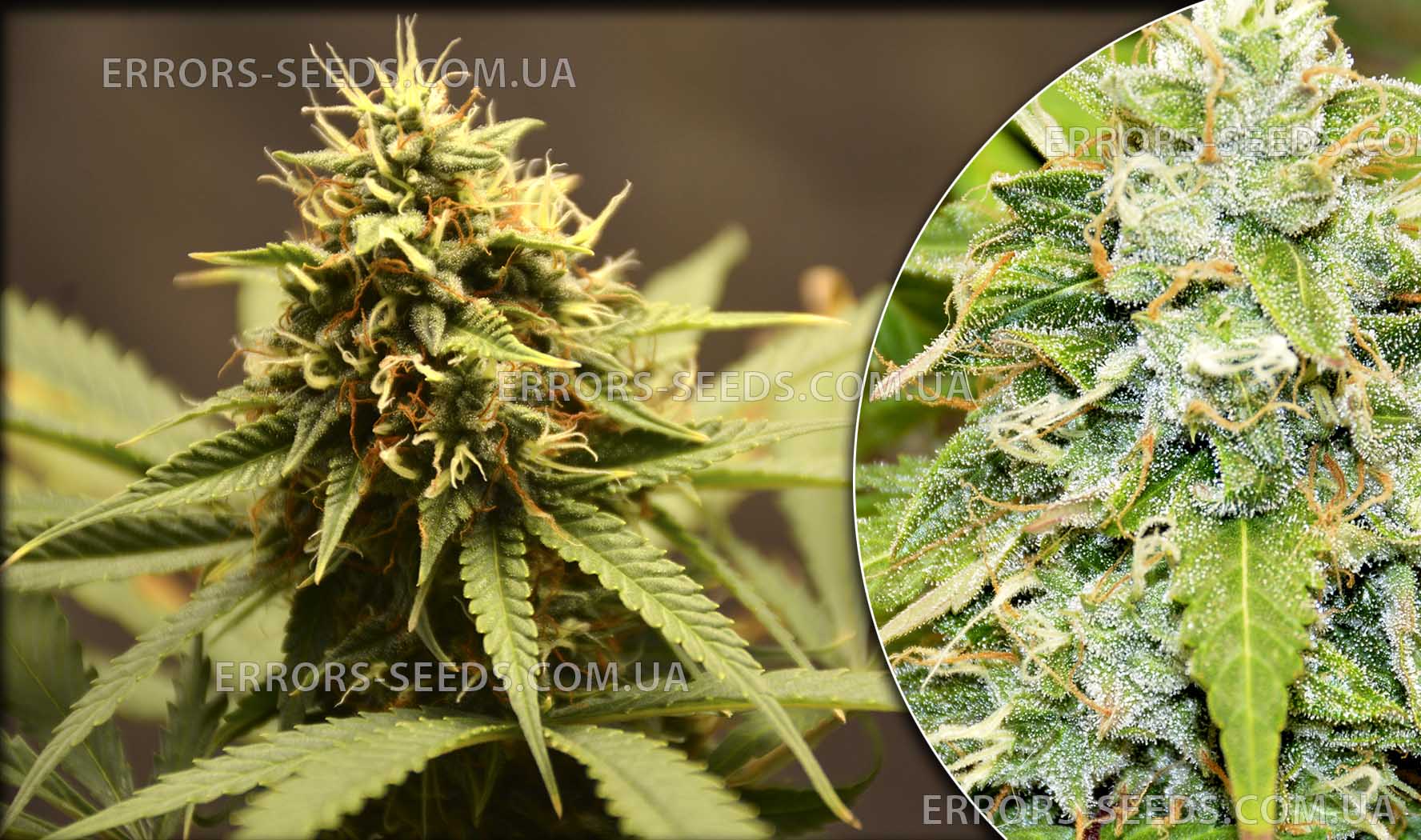
Full essential-oil synthesis needs quality photoperiod or fast autoflowering seeds. Microclimate control in a closed space (indoor) protects volatile fractions from burning off, while natural sun outdoors (outdoor) reveals the full depth of the aromatic bouquet.
On the Errors Seeds website you can select hybrids for any goal — from calming evening options to citrus energy strains.
Terpenes act as the main compass in the cannabis world because knowing their properties lets you predict a strain’s effect character from its aroma alone. Fresh citrus and pine notes promise alertness; musky and floral tones deliver deep relaxation.
Understanding the terpene profile turns seed selection into a deliberate and effective process.
Read the final part of the terpene guide on our blog: “What are terpenes? Part 3: Drying, curing and protecting the harvest”
The most common terpene is myrcene; in some indica hybrids it accounts for up to 50% of the total essential-oil volume.
Caryophyllene is unique because it is the only terpene that can bind directly to endocannabinoid CB2 receptors in the human body.
Limonene is responsible for the citrus aroma and energy effect; it is also found in citrus peel.
Pinene blocks the breakdown of acetylcholine, helping maintain mental clarity, good memory and concentration.
Yes. Terpenes are used as key markers for matching strains to specific therapeutic goals such as insomnia or anxiety.
Terpenes are widespread in nature: myrcene in mango and hops, limonene in citrus peel, pinene in pine needles, and linalool in lavender.
Series of articles on cannabis terpenes:
 Написать отзыв